
Books
Fire in Every Direction
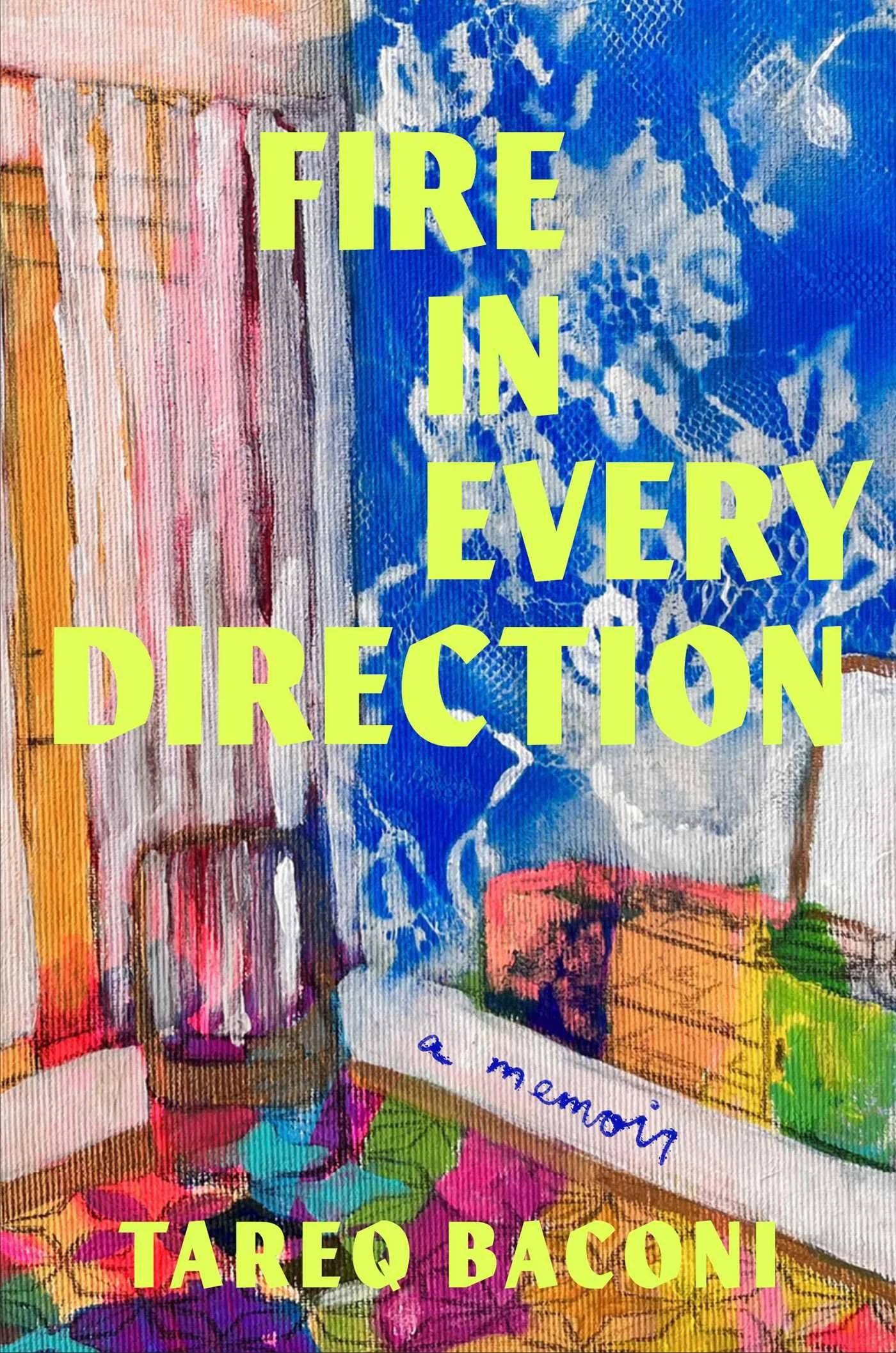
From the renowned Palestinian scholar, a memoir of political and queer awakening, of impossible love amidst generations of displacement, and what it means to return home.
Both a love story and a coming-of-age tale that spans countries and continents, Fire in Every Direction balances humor and loss, nostalgia and hope, as it takes us from the Middle East to London, and from 1948 to the present. Tareq Baconi crafts a deeply intimate, unforgettable portrait of how a political consciousness—desire and resistance—is passed down through generations.
In 1948, Tareq’s grandmother, Eva, would flee Haifa as Zionist militias seized the city. In the late 1970s, she would flee Beirut with her daughter, Rima, as the country was in the throes of a civil war. In Amman, the family would eventually obtain the comfort of middle-class life—still, a young Tareq would feel trapped: by cultures of silence, by a sense of not belonging, by his own growing awareness that he is in love with his childhood best friend, Ramzi.
After relocating to London for college, Tareq hopes to put aside his past, and begins to work through an understanding of self as a queer man. Yet as the Iraq War radicalizes young people around the world towards anti-war protest, history comes back to him: hushed whispers overheard, stories of his mother’s years as an activist in Beirut and her return to Palestine during a moment of calm.
Living between the region and London, Tareq fits in neither and feels alienated from both. Queerness is policed back in Amman, just as his Palestinian-ness is abroad. These gradual estrangements escalate, forcing him to grapple with what it means to live in liminal spaces, and rethink the meaning of home. Eventually, tracing the journey of his family before him, Tareq returns to Palestine.
This is an account of finding oneself through histories of dispossession and reclaiming what has been silenced.
Reviews
"In this poignant autobiography, queer Palestinian writer and activist Baconi tenderly explores identity, nationality, and family history [....] With lyrical prose and shrewd narrative instincts, Baconi transmutes hardship into comfort. Readers will find it difficult not to be moved."
—Publishers Weekly
"It is difficult to read Tareq Baconi’s intimate, mesmerizing meditation on dispossession and not think about how much safer it would have been to not write a book like this, to leave a dangerous past undisturbed. In stunning detail—both physical and emotional—Baconi traces a story of personal and communal alienation, longing, and liberation. Drawn here in beautiful, crushing clarity is an account of what systems of degradation, fear and theft can do to a person, a society, a world. That Baconi has managed to do all this in a memoir that still feels so firmly rooted in love is a marvel. Fire in Every Direction is a marvel."
—Omar El Akkad, New York Times bestselling author of One Day, Everyone Will Have Always Been Against This
“In this moving and generous memoir, Tareq Baconi refuses to separate the story of sexual identity from the story of political commitment, and in so doing models a way to see our personal struggles as intertwined with our collective ones. Fire in Every Direction is a beautiful account of one man's confrontation with the histories, silences, and desires—both communal and private—that have made him who he is.”
—Isabella Hammad, author of Enter Ghost and Recognizing the Stranger
"In Fire in Every Direction, we not only see how the oppression of a people has affected one Palestinian family, but how oppression in all forms—colonialism, patriarchy, homophobia, to name a few—creates dishonesty and masks within all of us. Tareq Baconi offers us a love letter, a blueprint on how to craft a life that questions the present, dreaming a better future in the process. By reading this beautifully honest memoir, we can learn to shed what must be shed in order to regain an allegiance toward justice, toward freedom, toward a liberation for all. Baconi has shown me that revolutions begin in the self; I am forever changed after reading this book."
—Javier Zamora, author of Solito
"In a time when it can feel like language has been stripped of meaning and words have lost all power, Fire in Every Direction arrives as an affirmation and a refusal of silence. Luminous, moving, and achingly beautiful, every page of this book is guided by Tareq Baconi's fierce intelligence and a tenderness that this world does not deserve. You do not read this book to repair your heart, you read this book to understand the fissures."
—Maaza Mengiste, author of The Shadow King
"Outstanding...I found the blend between the personal and political to be very cleverly achieved. A brilliant book."
—Raja Shehadeh, author of We Could Have Been Friends, My Father and I
“A powerful memoir of queer and Palestinian reckoning. Tareq Baconi creates 'a gaze of our own' by bringing his open heart to a tough confrontation with histories both intimate and diasporic. An important contribution to our many literatures.”
—Sarah Schulman, author of The Fantasy and Necessity of Solidarity
"With passion, sincerity, and wit, Baconi writes about the world he grew up in, about a time and place long gone, revivified in these beautiful pages. Spending time with the real people in Fire in Every Direction is a delight. Read this book!"
—Rabih Alameddine, author of Comforting Myths and An Unnecessary Woman
"With eloquence, passion, and insight, Tareq Baconi weaves his personal story as a queer kid growing up in the refugee community in Jordan, into the larger narrative of his family’s dislocation, and the Palestinian struggle. In so doing, he gives new meaning to the concept of liberation, personal and political. Fire in Every Direction is a primarily a love story: about how one learns to overcome loss—of a homeland, of a beloved—due to the interventions of authorities, be they parents or conquerors. It is a deeply inspiring and absorbing read, especially in these times."
—Mark Gevisser, author of The Pink Line
Hamas Contained
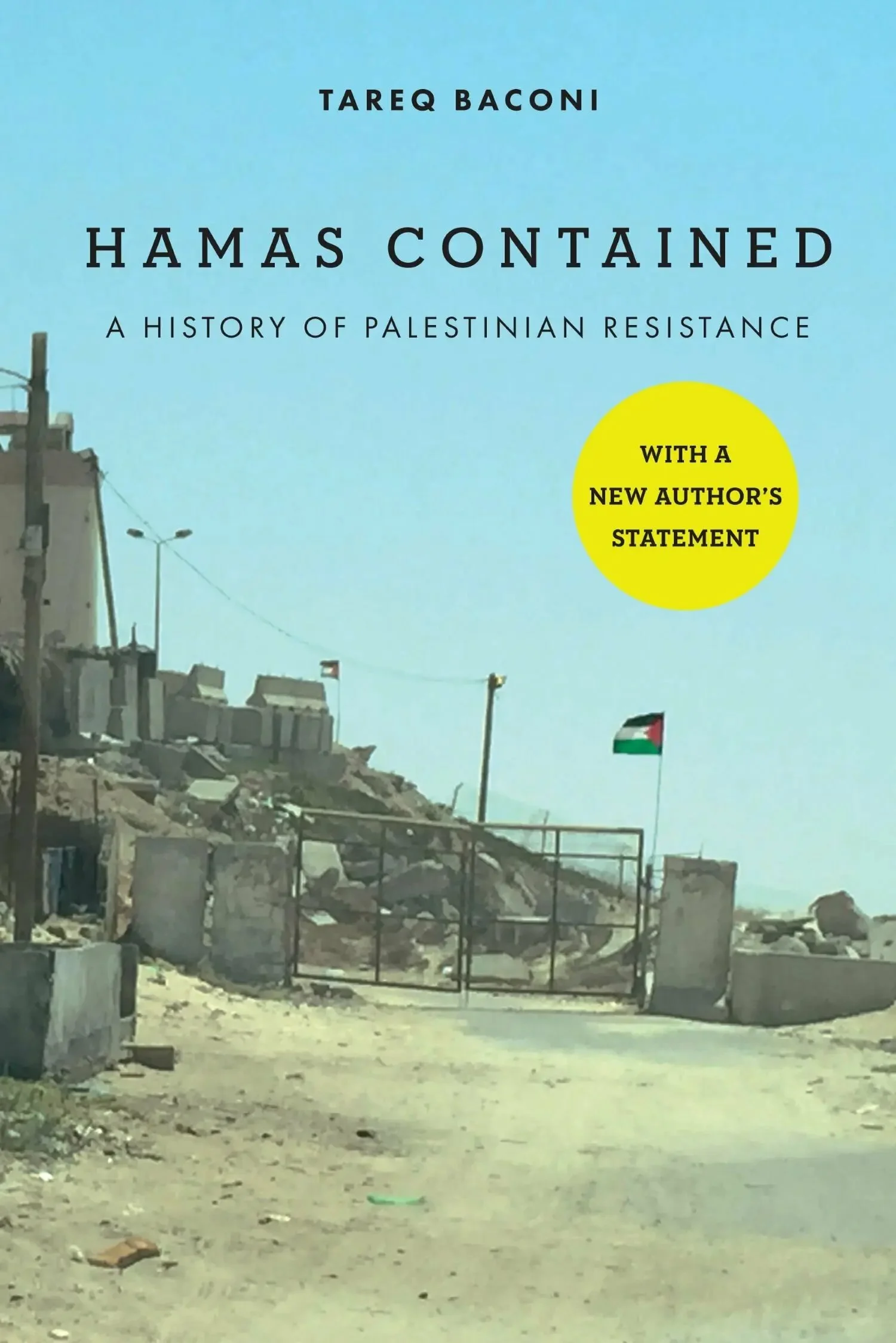
Hamas has ruled Gaza and the lives of the two million Palestinians who live there since 2006. Hamas Contained, first published in 2018, offers a history of the group, drawing on interviews with organization leaders and their publications. Tareq Baconi maps Hamas's thirty-year transition from fringe military resistance towards governance, culminating in Israeli efforts to contain the movement to the Gaza Strip. Baconi argues that under Israel's approach of managing rather than resolving the conflict, Hamas's demand for Palestinian sovereignty has effectively been marginalized in favor of military action against Hamas, and by implication, all Palestinians in the Gaza Strip. This dynamic—a violent equilibrium between Hamas and Israel and the movement's containment in the Gaza Strip—lasted for sixteen years, until it was decidedly shattered by Hamas's offensive on October 7, 2023.
Reviews
"Groundbreaking, rigorously researched, and strikingly fair-minded, Hamas Contained is essential reading to understand Middle East politics today. Tareq Baconi weaves a counter-narrative, upending common assumptions about the controversial Islamic organization."
—Avi Shlaim, author of The Iron Wall: Israel and the Arab World
"Hamas Contained is by far the best book on this vital topic. Meticulous and deeply sourced, this is essential reading for anyone with a serious interest in Hamas, Palestine, Israel, or Islamist political movements anywhere in the Middle East."
—Rashid Khalidi, author of Brokers of Deceit: How the U.S. Has Undermined Peace in the Middle East
"Tareq Baconi has written a detailed and thoughtful book about the history of Hamas and its effect on the Palestinian national movement. Avoiding black and white simplifications, Baconi puts the story of Hamas within its proper context—the tragedy of an occupation."
—Marwan Muasher, Vice President, Carnegie Endowment for International Peace
"Judicious and impartial, this important work adds nuance to the portrait of one of the Middle East's most divisive players."
—Publishers Weekly
"[Hamas Contained] probably gives the fullest background to the current situation in Gaza."
—Duncan Bowie, Chartist
"The book's main virtue is its chronological format. It covers Hamas's relatively brief existence – compared, say, to the much longer lifespan of the Muslim Brotherhood from which it derived – year by year, thereby giving the reader a fairly clear sense of how Hamas's perceptions and strategies have changed over time, particularly after Israel's unilateral withdrawal from Gaza in 2005."
—Steven Simon, Survival
"Baconi's book remains invaluable. It is of crucial importance for anyone interested in understanding Hamas [and] the Palestinian struggle today."
—Joseph Daher, Spectre
What Now
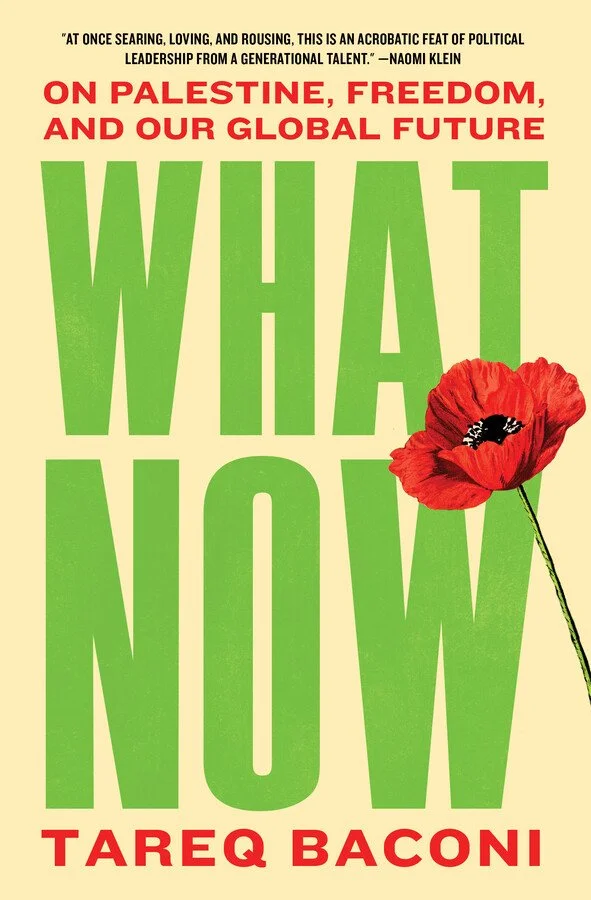
A soul-stirring philosophical and political treatise on what liberation for Palestine—and all people—will look like in the twenty-first century, in the vein of Frantz Fanon, Angela Davis, and Edward Said.
Palestine is a litmus test for our global future. The ongoing genocide is showcasing what it means for Palestinians to be taken to the brink of extermination. The outcome will have repercussions that will go beyond the Middle East, extending outward across the world, and will determine whether the struggle for decolonization will succeed or fail, whether our world will move toward collective freedom or fascism.
Drawing from Tareq Baconi’s extensive academic and organizing work with Palestinian and international activists, and from decades of long-standing strategies, What Now distills three strategic principles for a free Palestine to guide activists and allies: refuse the prospect of a divided homeland, reclaim the historic revolutionary politics at the heart of the Palestinian struggle, and decompose Zionism.
Imagining a free Palestine is a political act of resistance. This is not the same as turning back the clock to pre-1948, Baconi writes, but a new struggle for a just future. A free Palestine would heal the wounds left in the wake of the Second World War, by challenging and upturning the racism, colonialism, and imperialism that continue to animate global politics. It will tilt the world off its axis, away from annihilatory racism toward justice and peace.
Reviews
“At once searing, loving and rousing, this is an acrobatic feat of political leadership from a generational talent. Baconi conjures dazzling levels of intellectual courage and ethical clarity to imagine true freedom in the grips of a genocide, a freedom that flatly refuses to replicate or mirror the oppressor. The result is a propulsive read of unparalleled import.”
—Naomi Klein
“Amidst a flood of books reviewing the wreckage and consequences of the ongoing genocide, Tareq Baconi has chosen to look to the future and the past, to the long struggle for a Free Palestine—a struggle that can, and must, be won. Audacious, honest, visionary Baconi pulls no punches. Liberation is not about a state or recognition or “peace.” It is war by any means, for the land, for the right to return, for the end of Zionism, for decolonization, for global revolution. And how to get there is to be determined in collective struggle—a struggle that can, and must, be one.”
—Robin D. G. Kelley, author of Freedom Dreams: The Black Radical Imagination
"What kind of world do we wish to inhabit after a genocide? Continuously posing the right questions, Tareq Baconi not only wrests incandescent insight out of overwhelming defeat and despair. He dares to offer that rare thing these days---hope in a better future---and heroically affirms the invincible human determination to strive for liberation and fulfilment. In these bleak times, What Now reminds us of the transformative power of lucid and uncompromising thought."
—Pankaj Mishra, author of The World After Gaza
“With searing clarity and an unbending commitment to the liberation of Palestine from Zionist domination, Baconi offers us a conjunctural analysis of the ongoing genocide of Palestinians, the expropriation of their land and the historical forces which produce the exterminationist logic of Israel’s settler colonial project. His writing insists that history is not finished and that the fate of the Palestinian people is being determined by their autonomous resistance to annihilation. What Now offers clear and strategic insight for those situated inside the heart of empire – it is a call to critically assess, strengthen and escalate our solidaristic action”
—Lola Olufemi, author of Experiments in Imagining Otherwise
“In this urgent and unflinching book, Tareq Baconi writes with tenderness, ferocity, and clarity at a pivotal moment in Palestinian history. With surgical precision, What Now cuts through despair, disillusionment, and political stagnation to offer a lucid, clear-eyed roadmap to liberation. A manifesto for our movement.”
—Saleem Haddad, author of Floodlines
“An extraordinarily unsettling and bold book, weaving sharp historical and political analysis about the colonial reality with crucial guidelines on what must be done to overcome it.”
—Neve Gordon, author of Human Shields
“Tareq Baconi has written an open letter to his Palestinian siblings entreating us to find strength in our survival, enough to redouble our conviction to struggle until victory. What Now speaks directly to our internal fissures, our quiet doubts, our booming pain, and the rage that threatens to consume us. It boldly calls everything we have known and felt by its name so that we have the fortitude to keep going on. Baconi reminds us that while our liberation is necessary to save ourselves and a global future, it is not inevitable, and instead requires a strategic precision we have yet to develop.”
—Noura Erakat, Professor and author of Justice for Some: Law and the Question of Palestine and Confronting Zionism
“In the wake of Israel's genocide, What Now reaches for a politics adequate to the moment. Its diagnosis of 1988 as the strategic rupture that migrated partition into our own political grammar is among the sharpest such accounts in English; its reactivation of the thawabit, its reframing of sumud as latent militancy, and its placing of the decomposition of Zionism alongside the territorial question, give the book an architecture from which the global movement for Palestine can take direction. A welcome and generative intervention.”
—Abdaljawad Omar, Birzeit University
"What Now is one of the most important books written on Palestine in many years. It doesn’t only offer a diagnosis of our present, but a framework to building a different more hopeful future. Every Palestinian and every ally should read it, not merely to understand its arguments, but to grapple with them, carry them forward, and translate them into meaningful action."
—Ahmed Alnaouq
“What do we do in the aftermath, when there is still no ‘after’? In this compelling manifesto, Tareq Baconi speaks to this paradoxical predicament that Palestinians confront. His lucid political and conceptual interventions provide a rigorous lesson in ethics—a call to action that challenges the very meanings of solidarity, decolonization, and liberation. This is a must-read for all. What Now now!”
—J. Kehaulani Kauanui, author of Paradoxes of Hawaiian Sovereignty
“This brilliant little book by Tareq Baconi feels like a conversation with multiple voices working through the most essential questions facing scholars and activists commuted to Palestine today. Reading it gives a sense that the task of liberation is attainable and within reach.”
—Eyal Weizman, author of Investigative Aesthetics
Publications
Essays and Op-Eds
"Gaza Under Siege", London Review of Books, 10 July 2025.
"Living the Nakba", New York Review of Books, October 3, 2024.
"Killing Their Way to Peace,", New York Review of Books, August 15, 2024“
"Confronting the Abject: What Gaza Can Teach Us About the Struggles That Shape Our World", LitHub, June 5, 2024.
“The Two-State Solution Is an Unjust, Impossible Fantasy,” New York Times, April 1, 2024.
“What was Hamas Thinking?,” Foreign Policy, 22 November 2023.
“Gaza without Pretences,” New York Review of Books, October 11, 2023.
“Enforcing Apartheid in the West Bank,” New York Review of Books, March 3, 2023.
“Israel’s Liberal Bubble,” London Review of Books, March 2, 2023.
“Revolutionary Interventions: Fighting an outbreak of sexual violence in Tahrir Square.” The Baffler, March 2023.
“The Trap of Palestinian Participation,” Jewish Currents, February 10, 2023.
“Dreams of a Palestine where I can hold myself whole,” Skin Deep, August 8, 2022.
“Critique as Movement Building: The Apartheid Reports on Palestine,” Mada Masr, March 29, 2022.
"The Loss of Tatas," The Baffler, February 9, 2022.
“What Apartheid Means for Israel,” New York Review of Books, 5 November 2021.
“Cambridge Did This: Queer Borders,” London Review of Books, 4 November 2021.
“Sheikh Jarrah and After,” London Review of Books, May 14, 2021
“Israel’s Annexation, Palestinian Resistance,” New York Review of Books, July 2, 2020
“Our lives are not conditional: On Sarah Hegazy and estrangement,” Mada Masr, 23 June 2020.
“A Year of Gaza Protests,” New York Review of Books, March 29, 2019
“What the Gaza Protests Portend,” New York Review of Books, May 15, 2018
Anthologies
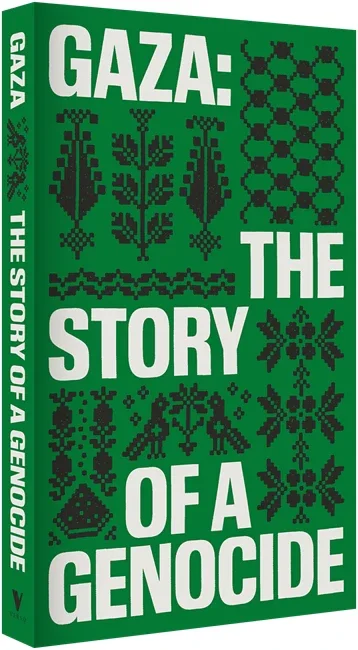
Gaza: The Story of a Genocide is an urgent and powerful collection of personal testimony, poetry, art, and frontline reportage. Together, these works bear witness to the vast and ongoing destruction inflicted on the Palestinian people—their lives, their land, and their future.
Ahmed Alnaouq recounts the devastating loss of twenty-one family members. Noor Alyacoubi offers a searing reflection on starvation. Mariam Barghouti examines the brutality of Israeli settler violence in the West Bank, while Eman Bashir describes the phenomenon of a “wounded child, no surviving family.” These voices, among many others, illuminate the enduring psychological, physical, and generational toll of state violence.
With contributions from recipients of the Palestine Book Award, Arab American Book Award, Pulitzer Prize, Emmy Award, National Book Award, and Gandhi Peace Award, this collection also honors the late poet Hiba Abu Nada—killed in an Israeli airstrike on her home in Khan Younis, Gaza, on October 20, 2023.
All royalties will be donated directly to the United Nations Relief and Works Agency (UNRWA) for Palestine Refugees in the Near East.
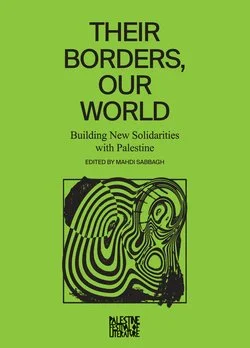
From the organizers of the Palestine Festival of Literature, this anthology of essays connects Palestinian resistance with global freedom struggles against settler colonialism and calls on us to think more concretely about the practice of solidarity.
The Palestine Festival of Literature, or PalFest, was created in 2008 as “a cultural initiative committed to the creation of language and ideas for combating colonialism in the 21st century.” The annual festival brings authors from around the world to convene with readers, artists, writers, and activists in cities across Palestine for cross-pollination of radical art, ideas, and literature.
These efforts resulted in Beyond Frontiers, an anthology thoughtfully arranged and introduced by PalFest cocurator Mahdi Sabbagh. Contributors include writers and scholars such as Tareq Baconi and Dina Omar, architect Mabel O. Wilson, and filmmaker Omar Robert Hamilton, among others, each bringing their diverse intellectual and geographic backgrounds to the forefront. Each piece grapples with the questions: How do we confront the need to take inevitable and often difficult political stances? How do we make sense of the destruction, uprooting, and pain that we witness? And given our seemingly impossible reality, how is mutuality constructed?
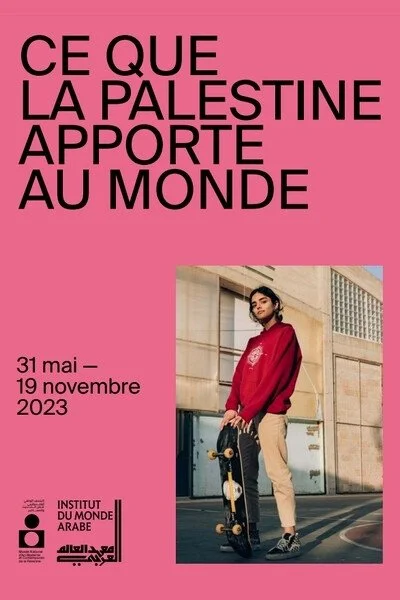
Depuis 2016, l’IMA abrite en ses murs la collection du futur Musée national d’art moderne et contemporain de la Palestine, une « collection solidaire » de quelque 400 œuvres constituée de dons d’artistes, réunie à l’initiative d’Elias Sanbar, écrivain et ancien ambassadeur de la Palestine auprès de l’Unesco, et coordonnée par l’artiste Ernest Pignon Ernest.
En 2023, l’Institut a choisi de donner à voir l’effervescence culturelle que la Palestine ne cesse de révéler et d’entretenir : un cycle de trois expositions met en avant les artistes modernes et contemporains palestiniens, dans un dialogue avec leurs homologues du monde arabe et la scène internationale. Une programmation culturelle variée – concerts, colloques, ateliers, cinéma, rencontres littéraires –, rythmera cet événement de juin à novembre.
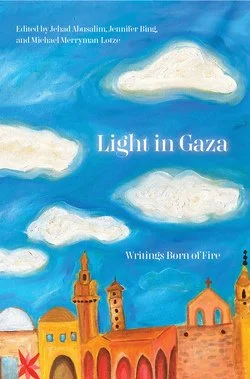
Light in Gaza: Imagining the future of Gaza beyond the cruelties of occupation and Apartheid, Light in Gaza is a powerful contribution to understanding Palestinian experience.
Gaza, home to two million people, continues to face suffocating conditions imposed by Israel. This distinctive anthology imagines what the future of Gaza could be, while reaffirming the critical role of Gaza in Palestinian identity, history, and struggle for liberation.
Light in Gaza is a seminal, moving and wide-ranging anthology of Palestinian writers and artists. It constitutes a collective effort to organize and center Palestinian voices in the ongoing struggle. As political discourse shifts toward futurism as a means of reimagining a better way of living, beyond the violence and limitations of colonialism, Light in Gaza is an urgent and powerful intervention into an important political moment.
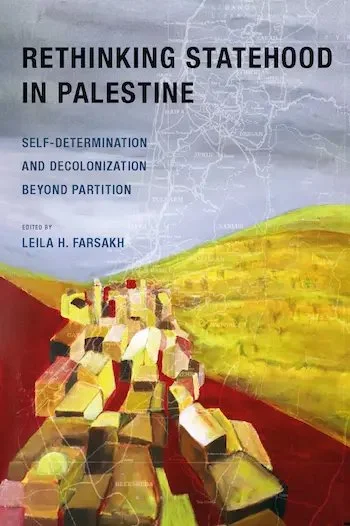
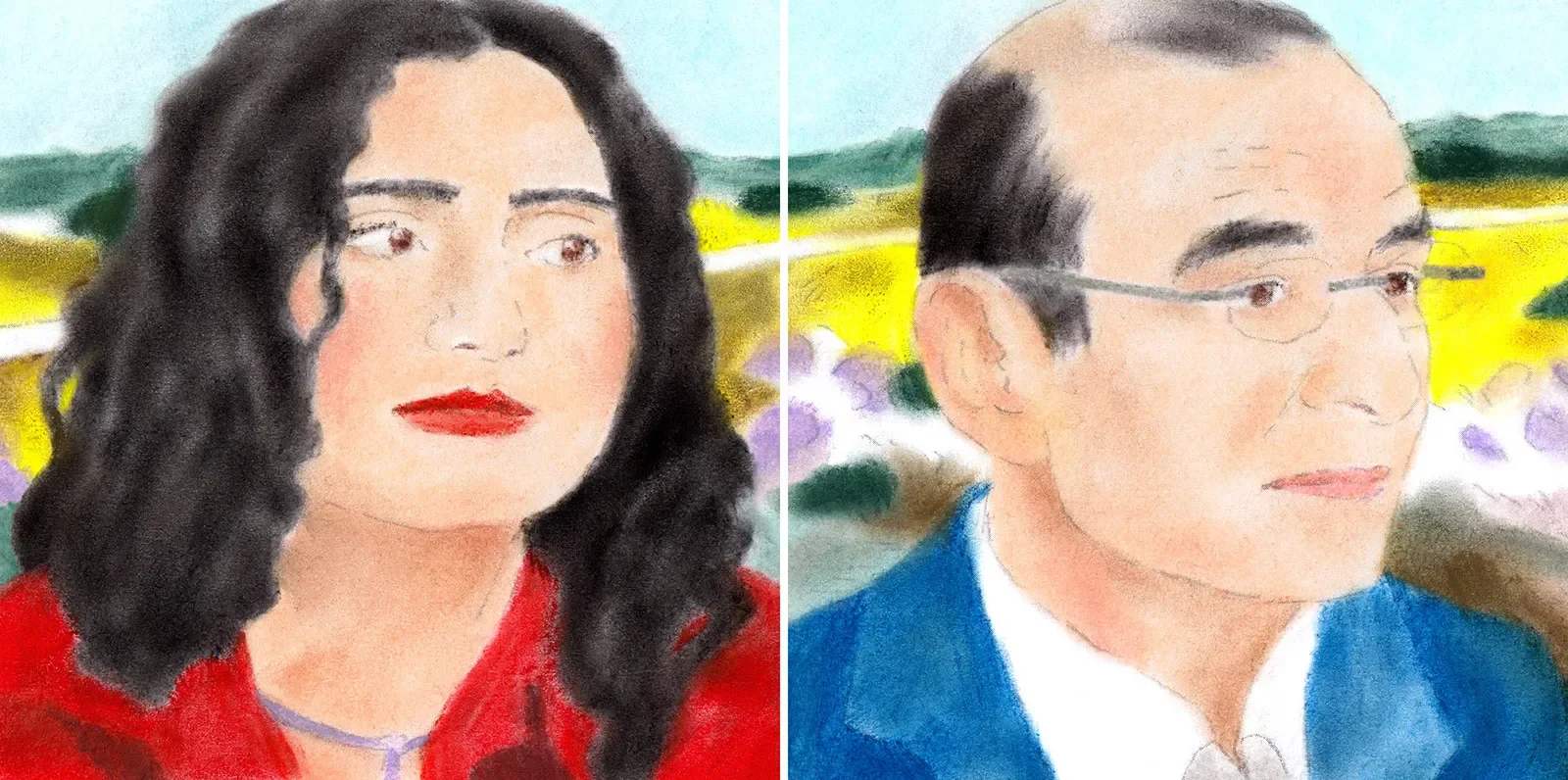
The quest for an inclusive and independent state has been at the center of the Palestinian national struggle for a very long time. This book critically explores the meaning of Palestinian statehood and the challenges that face alternative models to it. Giving prominence to a young set of diverse Palestinian scholars, this groundbreaking book shows how notions of citizenship, sovereignty, and nationhood are being rethought within the broader context of decolonization. Bringing forth critical and multifaceted engagements with what modern Palestinian self-determination entails, Rethinking Statehood sets the terms of debate for the future of Palestine beyond partition.
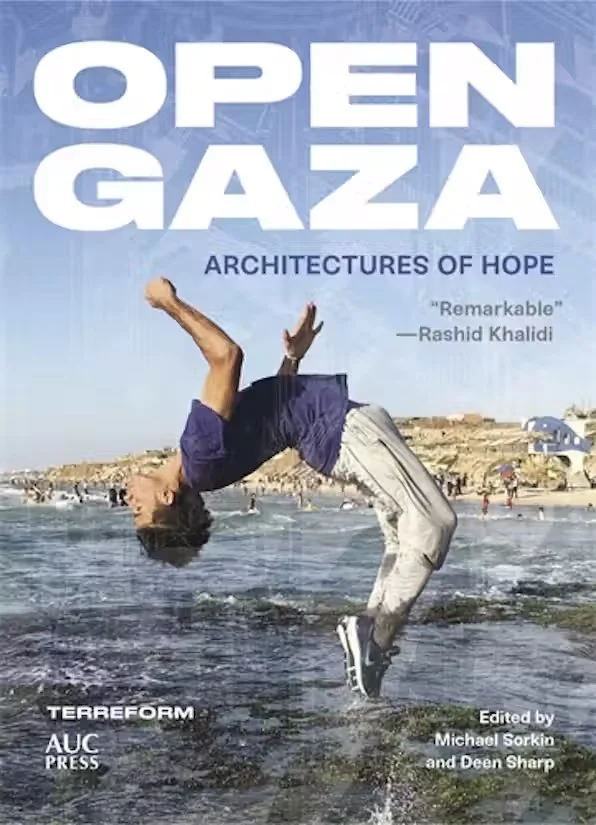
Cutting-edge analysis on how to improve life inside the Gaza Strip through architecture and design, illustrated in full-color
The Gaza Strip is one of the most beleaguered environments on earth. Crammed into a space of 139 square miles (360 square kilometers), 1.8 million people live under an Israeli siege, enforcing conditions that continue to plummet to ever more unimaginable depths of degradation and despair. Gaza, however, is more than an endless encyclopedia of depressing statistics. It is also a place of fortitude, resistance, and imagination; a context in which inhabitants go to remarkable lengths to create the ordinary conditions of the everyday and to reject their exceptional status. Inspired by Gaza’s inhabitants, this book builds on the positive capabilities of Gazans. It brings together environmentalists, planners, activists, and scholars from Palestine and Israel, the US, the UK, India, and elsewhere to create hopeful interventions that imagine a better place for Gazans and Palestinians. Open Gaza engages the Gaza Strip within and beyond the logics of siege and warfare, it considers how life can be improved inside the limitations imposed by the Israeli blockade, and outside the idiocy of violence and warfare.
Film
One Like Him (Short film, 2023)
A Jordanian man, Karim must find a way to tell his childhood friend and first love (Ramzi) the truth about what happened twenty years ago, when a single moment changed both their lives. When he can’t find the words, the conversation repeats, becoming increasingly surreal until he loses control.
Credits
Director: Caitlin McLeod
Writer: Tareq Baconi
Writer: Caitlin McLeod
Producer: Jessica Palmarozza
Cast: Kais NashifKey
Cast: Loai NoufiKeya
Festivals
Mill Valley Film Festival, San Francisco
NYC Queer Festival
BFI Northern Voices, HOME Manchester
Outfest Fusion, Los Angeles
Wicked Queer, Boston
Roze Filmdagen Festival, Amsterdam
Xposed Queer Film Festival, Berlin
Arab Film Festival, Berlin
Film Pride, Brighton
Northern Visions in Belfast
Soura Film Festival, Berlin
Awards
Cambridge Film Festival, BIFA Qualifying
North East Film Festival, BIFA Qualifying, Award Best LGBTQ+ Film
Tels Quels Festival, Brussels, Jury Award
Frameline 46 LGBTQ+ Film Festival, San Francisco, BAFTA Qualifying
Spirit of Independence Film Festival, ‘Best of Film Hub North’
Appearances
The Impossible Return The Markaz Review, July 10, 2026.
On identity, displacement, and home ABC with David Marr, May 21, 2026
Zionism Will Collapse Zeteo, March 20, 2026.
What Happens When Your Story Collides with Genocide? | Tareq Baconi on Gaza
“In this episode of Out Loud with Ahmed, I sat down with acclaimed writer and analyst Tareq Baconi to unpack his groundbreaking new memoir Fire in Every Direction.” December 19, 2025
The Truth About Hamas, 7th October and Israel’s Ongoing Genocide
“In conversation with Ash Sarkar, Novara Media, Baconi talks about Hamas Contained and Fire in Every Direction.” December 14, 2025
Accounts of the Struggle Interviewed by Max Nelson
“The work for Palestinians today is to explore how we can reclaim our revolutionary legacy and extend it into the twenty-first century.” September 21, 2024
Toward Decolonization in Palestine
"Toward Decolonization in Palestine," Counter Punch with Ashley Smith, February 16, 2024
Where the Palestinian Political Project Goes from Here, Interviewed by Isaac Chotiner
For decades, Hamas and Israel have maintained a violent equilibrium. How will the war change that paradigm?
Palestine and Holocaust Memory Politics
October 11, 2023 "Palestine and Holocaust Memory Politics," Haus der Kulturen der Welt, June 11, 2022
Talks & interviews
Podcasts
The PalFest Podcast: FIRE IN EVERY DIRECTION with Tareq Baconi & Ta-Nehisi Coates
“In this special live recording of The PalFest Podcast direct from Middle Church NYC, we bring you the launch of Fire in Every Direction: A Memoir, Tareq Baconi’s singular coming-of-age story about queer and political awakening from within the Palestinian diaspora. Baconi was joined by Ta-Nehisi Coates in a conversation about personal and political memoir.” November 24, 2025
"This is how Hamas is Seeing This", New York Times with Ezra Klein, December 5, 2023.
"Hamas," The Dig, October 27, 2023.
"After the Ceasefire", London Review of Books with Adam Shatz, 21 May 2021.
TV
"What Next for Hamas after Yahya Sinwar's Death", with Fareed Zakaria, October 20, 2024.
"On Hamas Chief Sinwar's Death & Why Killing Palestinian Leaders Won't Pacify Resistance," Democracy Now, October 18, 2024.
"On the Origins, Goals and Future of Hamas", PBS Amanpour and Company, October 25, 2023.
Events
October
21 October, Ta-Nehisi Coates & Tareq Baconi: On Freedom, South Bank Centre, London
26 October, New York, Conversation with Ta-Nehisi Coates organized by PalFest, Middle Collegiate Church, 3 - 5pm.
November
3 November, New York, Reading with Cheryl Lu-Lien Tan and Marlon James, Performance Space New York, 7pm.
6 November, New York, Book launch event, Leslie Lohman Museum, 6 - 8pm
10 November, New York, Center for Palestine Studies, Columbia University.
11 November, Philadelphia, Conversation with Noura Erakat, UPenn, 5 - 7pm.
12 November, Cambridge, Freedom School, 7pm.
16 November, Chicago, Conversation with Bill Ayers, Haymarket House, 5pm.
19 November, Berkeley, UC Berkeley, Conversation with Ramsey McGlazer.
20 November, LA, Occidental College, Conversation with Saree Makdisi
21 November, LA, Vroman's Bookstore Pasadena, Conversation with Robin Kelley.